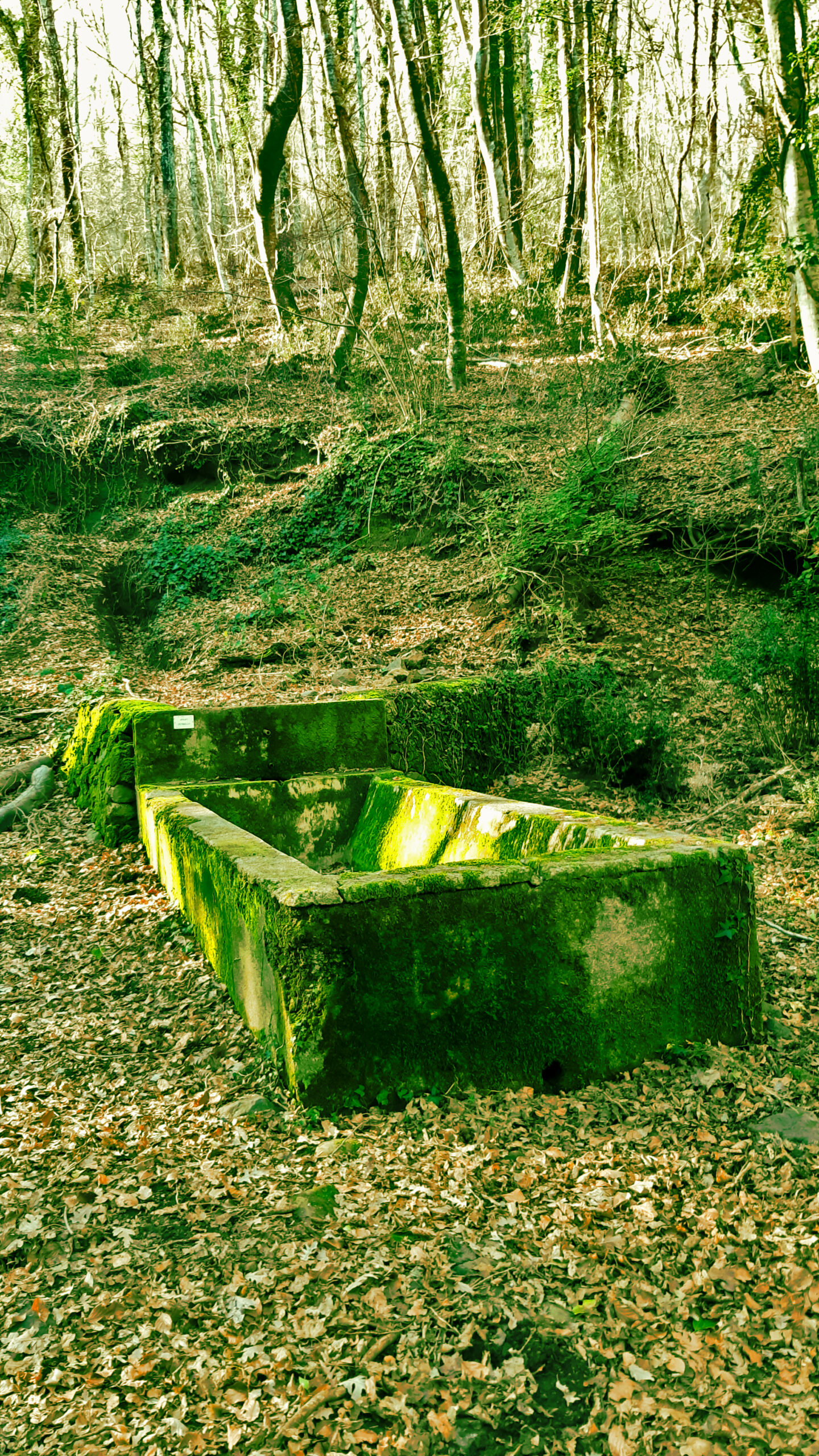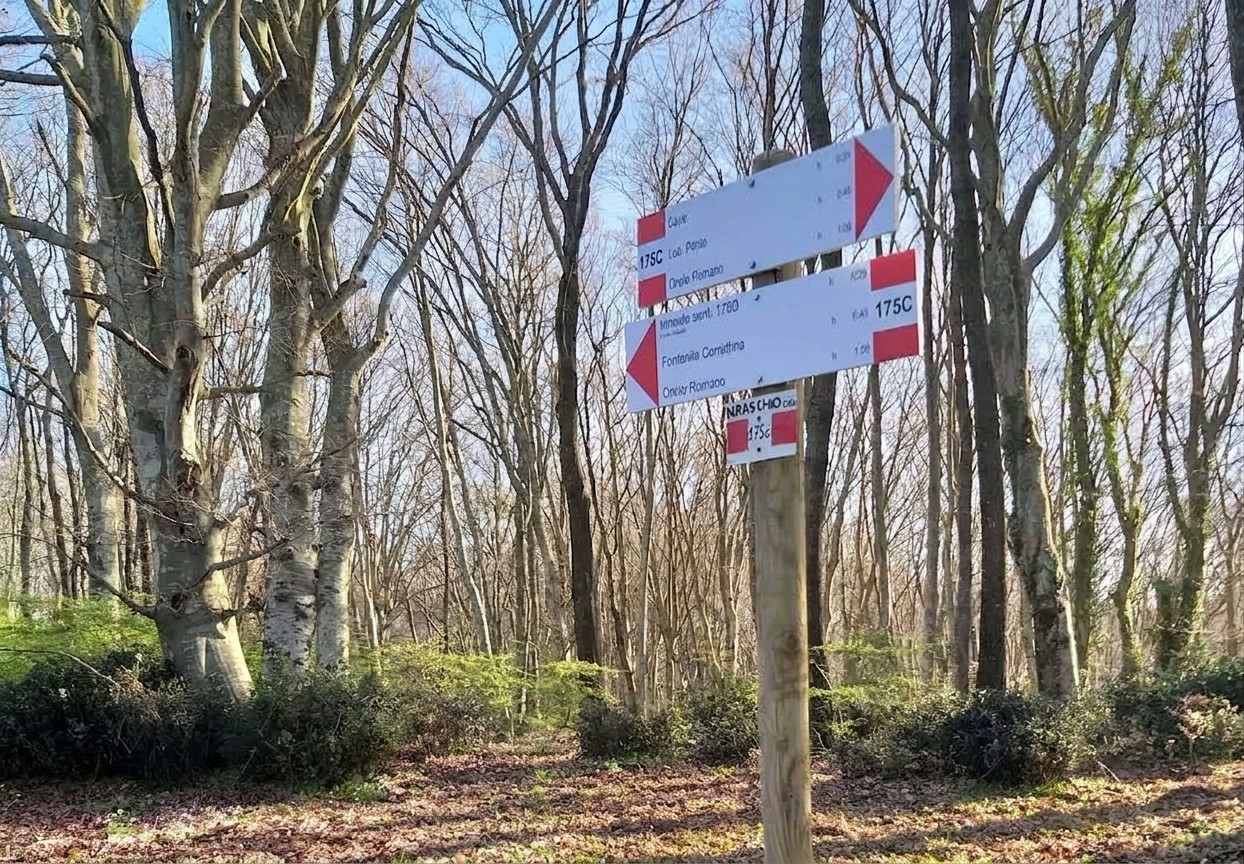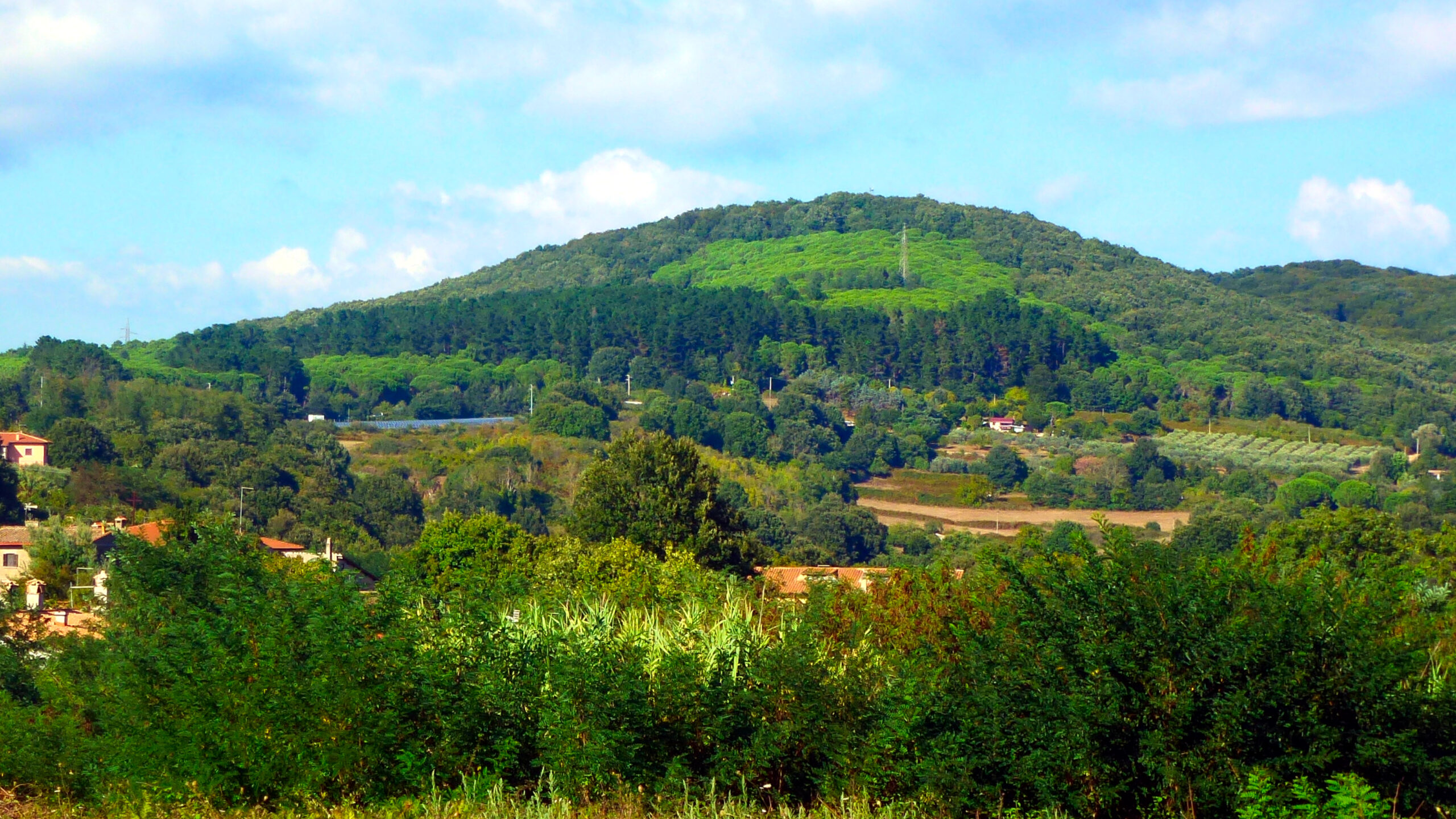
The Monte Raschio beech forest , in the Oriolo Romano area, tells a surprising naturalistic story: it is a " depressed beech forest ," that is, a beech forest that grows at a much lower altitude than normal, between 400 and 550 meters , compared to the 700-1,000 meters where this species usually thrives. This phenomenon is made possible by a particular microclimate , fueled by humid currents rising from nearby Lake Bracciano and by more frequent rainfall than in the rest of the region.
Scientists consider these forests to be true " glacial relics ": beech populations that, at the end of the last ice age, around 10,000 years ago , remained trapped at lower altitudes while the climate warmed, surviving only thanks to exceptional local conditions like those of Monte Raschio . The landscape also originated from the ancient activity of the Sabatino volcano , which shaped the entire Sabatini Mountains area starting around 600,000 years ago .
Recognized in 2017 as a component of the UNESCO serial site of primeval European beech forests, the area is now a Special Area of Conservation within the Bracciano-Martignano Regional Natural Park , and is home, in addition to beech trees, also to chestnut trees, Turkey oaks, stone pines, field maples and holm oaks, along with fauna that includes wolves, wildcats, porcupines and numerous species of nocturnal birds of prey.
The forest that wasn't supposed to be
How a microclimate allowed a beech forest to survive outside its natural environment
A rule of nature, and an exception
In botany, there's a fairly reliable rule: in central Italy, beech trees grow well starting at about 700-900 meters above sea level, where the climate is cooler and more humid than the Mediterranean climate typical of lower altitudes. This rule holds true almost everywhere in the Apennines—except on Monte Raschio, where beech trees thrive at just 400-550 meters, deep in the Sabatini Mountains, a stone's throw from Lake Bracciano. Scientists call this phenomenon a "depressed beech forest"—not in a psychological sense, but because the forest is located at an abnormally low, or "depressed," altitude compared to where one would expect it to be.
A volcano and a lake that create a microclimate
The explanation for this anomaly lies in the unique combination of two geological and geographical factors. The first is the area's volcanic origin: the entire Sabatini Mountains district was formed by the activity of an ancient volcano, beginning approximately 600,000 years ago, which left behind particularly fertile and permeable soil. The second, even more crucial, is the presence of Lake Bracciano: the humid currents rising from the body of water toward the lake's northeastern slope, combined with more abundant precipitation than in the rest of the region, create a cool and consistently humid microclimate—conditions that mimic, at low altitude, those beech trees would normally encounter in the mountains.
A relic of the glaciation
Ecologists define forests like Monte Raschio as "glacial relics": plant populations that, thousands of years ago, occupied a much larger area, when the European climate was colder due to the last Ice Age, which ended about 10,000 years ago. As the climate gradually warmed, the beech forests retreated to higher altitudes and more northern latitudes—but in some particularly favorable climatic "islands," like Monte Raschio, they managed to resist, surviving to this day in a context now dominated by Mediterranean vegetation.
It is precisely this condition of climatic isolation, together with the resulting scientific value for the study of the adaptation of forest species, that motivated the inclusion of the Monte Raschio beech forest, together with that of Monte Cimino, in the UNESCO serial site of ancient primeval European beech forests in 2017.
A forest inhabited not only by beech trees
The beech forest is not a monolith of a single species: chestnut trees, Turkey oaks, stone pines, field maples, and holm oaks alternate with beech trees, creating a rich plant mosaic. The fauna that inhabits it is equally diverse: wolves, wild cats, porcupines, badgers, foxes, and nocturnal birds of prey such as owls and tawny owls find in this relatively small forest—just 74 hectares in the protected heart—a surprisingly biodiverse refuge, just a few kilometers from Rome.
Sources used for this study
- UNESCO World Heritage Center — whc.unesco.org, serial site "Ancient and Primeval Beech Forests of the Carpathians and Other Regions of Europe"
- Bracciano-Martignano Regional Natural Park Authority — parcobracciano.it
- Lazio Region — parchilazio.it, "Beech Forests of Monte Raschio and Oriolo" factsheet
- Wikipedia (IT) and popular naturalistic sources checked and integrated with the primary sources listed above
What to see
| CAI trail 175C — a circular route of approximately 8 km that starts and returns to Oriolo Romano, crossing pine forests, Turkey oak forests, and the heart of the UNESCO beech forest. |
| The summit of Monte Raschio (552 m) — the highest point in the area, reachable on foot via a medium-difficulty route. |
| The Ciclovia dei Boschi (Woods Cycle Path) — a cycle-hiking trail that connects the Oriolo Romano station to Lake Bracciano, passing through a beech forest. |
| The village of Oriolo Romano — with the monumental garden of Altieri Castle, an ideal starting point for visiting the beech forest. |
| Fonte Petrella — one of the branches of the main trail, among the springs that feed the microclimate of the beech forest. |
How to get there
- Train (recommended): From Rome, take the Rome-Viterbo regional line and get off at Oriolo Romano station; from there, the path to the beech forest is about a 10-12 minute walk.
- By car: Take the SS Cassia bis or Braccianese Claudia road towards Oriolo Romano; park in the town center, where the trail begins.