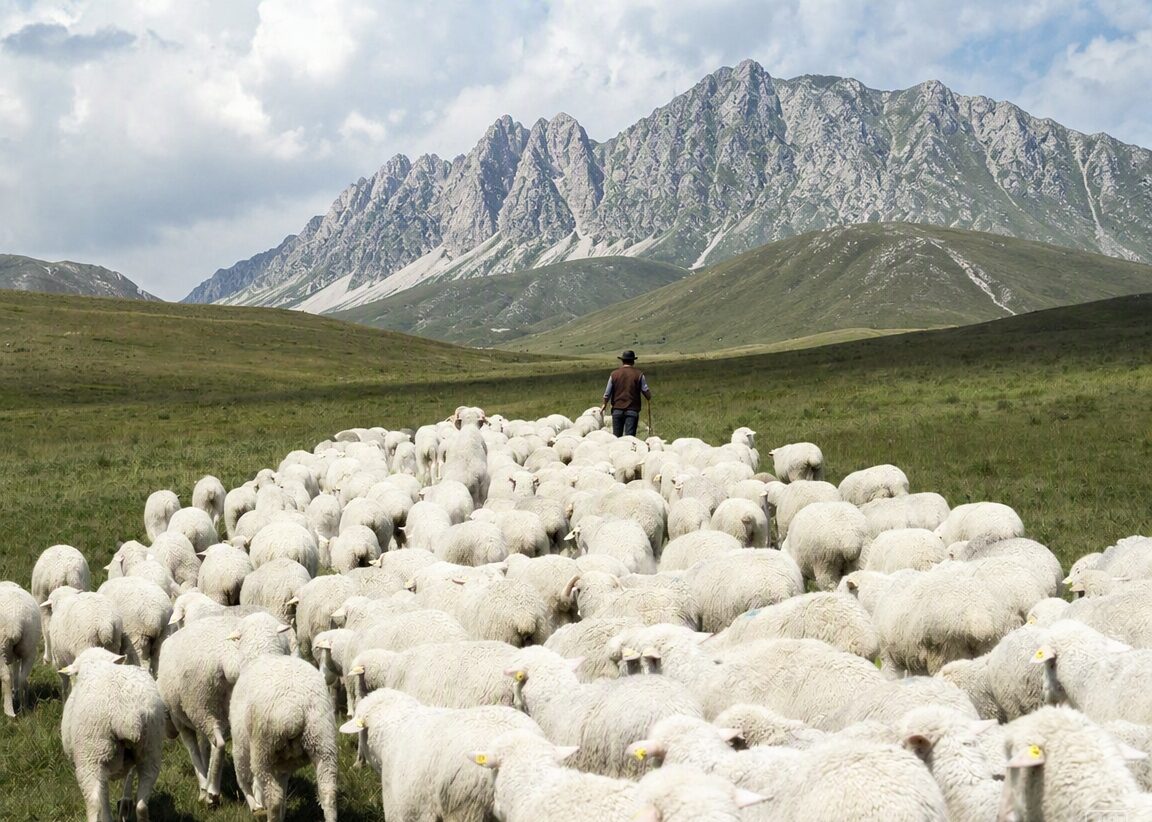
Transhumance is the seasonal movement of flocks and herds between different pastures, led by shepherds who move with their animals along grassy paths called tratturi: in summer towards high-altitude pastures, in winter towards the more temperate plains. It is a practice with prehistoric roots that, in Lazio, has shaped the landscape of the Monti della Laga, Cicolano , and the entire central Apennines for millennia, creating a balanced relationship between people, animals, and the environment that experts today consider a model of sustainability.
On December 11, 2019, meeting in Bogotá, the UNESCO Intergovernmental Committee inscribed Transhumance on the Representative List of the Intangible Cultural Heritage of Humanity , unanimously accepting the nomination submitted by Italy, Austria , and Greece. The Italian dossier, coordinated by the Ministry of Agricultural Policies, began in Lazio: the nomination was in fact launched by Amatrice , a municipality in the province of Rieti already hit by the devastating earthquake of 2016, as a sign of revitalization and pride in a rural identity that the quake had failed to shatter. Along with Amatrice, the dossier identified other communities symbolic of the practice throughout Italy, from Abruzzo to Puglia , from Campania to Trentino .
The award honored not a single place, but a shared gesture: the shepherds’ journey accompanied by their dogs and horses, the stops at traditional ” stations ” along the sheep tracks , the profound knowledge of the environment and the seasons that generations of farmers have accumulated over time. Today, transhumance in Lazio is concentrated primarily in the Cicolano and Monti della Laga areas, where every summer the flocks ascend to the karst plateaus like Rascino, at over 1,100 meters above sea level, before descending back to the valley in autumn.
Source: Italian National Commission for UNESCO — unesco.it; Ministry of Agricultural Policies (MASAF) — masaf.gov.it; ANSA; Coldiretti Lazio
What to see and experience
| Lazio Shepherds’ Festival and Sheep Show, Rascino Plateau: the most important and long-running event – over 50 years old – with the arrival of the livestock, the reenactment of agricultural and pastoral rituals, a market selling local products, and educational farms for families. It takes place every year on the first Sunday of August on the Fiamignano Plateau (RI), at an altitude of 1,150 meters. |
| The Rascino Plateau: a high-altitude karst landscape, among the most evocative in inland Lazio, where summer pastures still reflect the rhythm of transhumance, even outside of holidays. |
| Amatrice and the Laga area: the municipality that launched the UNESCO nomination in 2018, a symbol of the resilience of the Apennine pastoral communities after the 2016 earthquake. |
| Transhumance products: pecorino cheese, ricotta cheese, and traditional local sheep herding, often at the center of September festivals and fairs in the villages of the Rieti area. |
Getting there — Rascino Plateau (Fiamignano, RI)
- By car: A24 Rome-L’Aquila motorway, Carsoli-Oricola exit or continue on the SS via Salto, then the SP to Fiamignano and the Rascino plateau (about 1 hour and 45 minutes from Rome). A car is recommended: the site is not easily accessible by public transport.
- During the festival, there is generally a dedicated parking area on the plateau; check the instructions issued by Coldiretti Lazio and the Municipality of Fiamignano near the event.
How to get there — Amatrice
- By car: A24 Rome-L’Aquila, Torano-Avezzano-San Giovanni exit, then SS4 Salaria towards Amatrice (about 2 hours from Rome).